Showing posts with label Culture. Show all posts

Thursday, May 11, 2023

How can we save unique Apatani culture?

 The Apatani tribe of Ziro Valley, Arunachal Pradesh is an indigenous group in India that has a unique culture and way of life. We all must put efforts in saving our unique culture, one must do these:
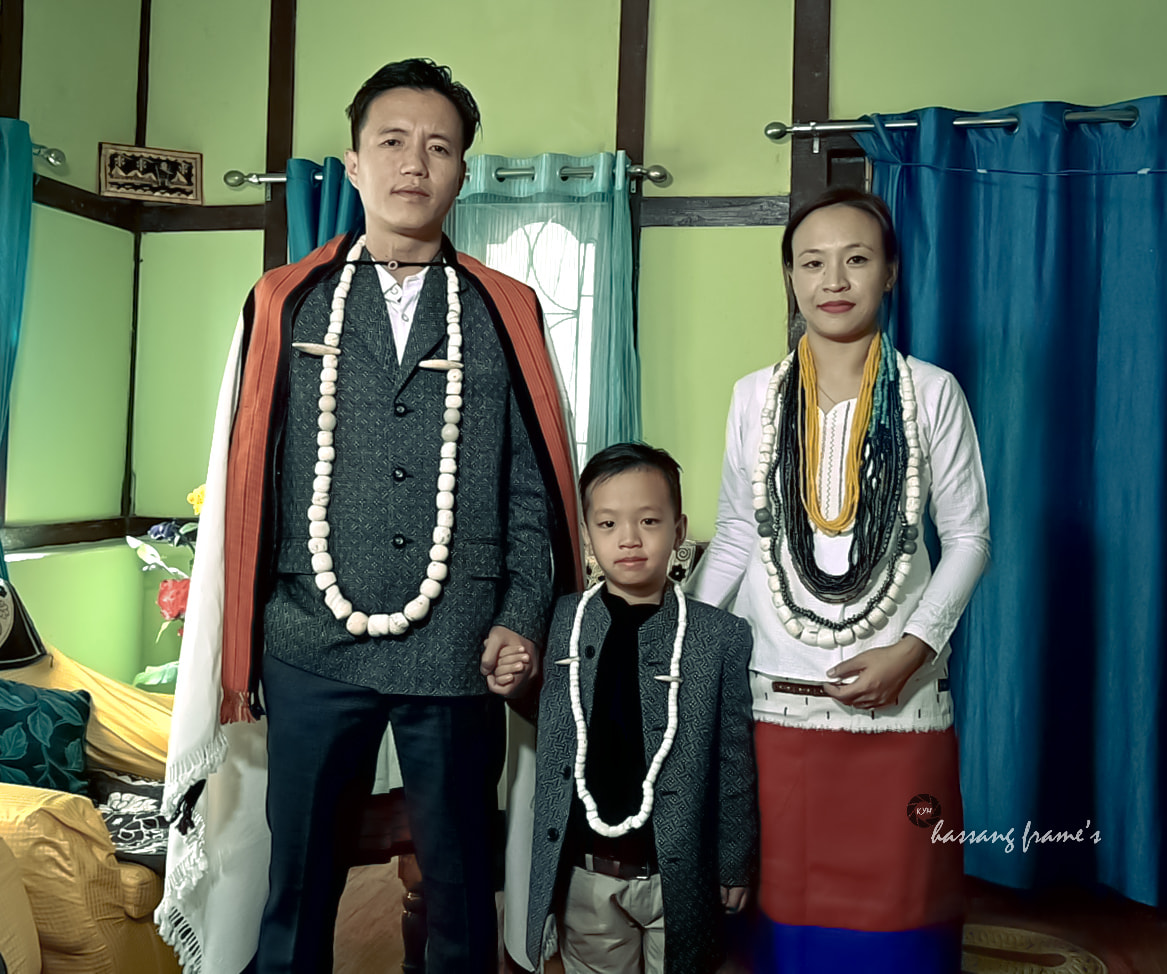
Photo credit : Hassang Frame's

  1. Educate yourself about the culture: Learn about the Apatani people, our history, customs, traditions, and beliefs. This will give you a better understanding of our culture and the challenges we face.

  2. Promote cultural tourism: Encourage people to visit the Apatani region i.e. Ziro valley where we are originated and learn about our culture. This can help create awareness and generate income for the community.

  3. Support local artisans: The Apatani people have a rich tradition of handicrafts, such as bamboo and cane work, weaving, and pottery. Buy their products and support their livelihoods. Perhaps you also can learn to weave.

  4. Encourage the younger generation to save our unique culture: Many young Apatani people are moving away from their traditional way of life. we must encourage them to learn about their culture and take pride in their heritage.

  5. Photo credit : Hassang Frame's

    Photo credit : Hassang Frame's


  6. Preserve the environment: The Apatani people have a unique way of farming that is ecologically sustainable. Encourage the preservation of their traditional farming methods, which also will preserve the environment. we should work towards sustainability.

  7. Photo credit : Tage Kanno
  8. Partner with local organizations: Support local organizations that work to promote and preserve the Apatani culture etc.

Overall, it's important to approach cultural preservation in a respectful and collaborative way by our government working with the Apatani people themselves to ensure that their culture is preserved and celebrated for generations to come.

Monday, May 1, 2023

Transplantation period: Halyin allu ludu


Danyi donge dola hwla dumo duji kema;
Mwdo domiñ dola hwla damo daji kema!
Halyiñ allu si hache' myodu.
(Literal translation:
Can't stop working just because sun is shining too hot;
can't stop and stand still just because it is raining heavily!
Halyiñ pwlo is the busiest time.)
Ziro natives are busy in transplantation their paddy saplings from #Midiñ(Nursery) to #Aji (paddy field). One of the busiest month for our farmers.
Photos taken from various sources.
Endi (rice saplings) kwnne hepe donw?
Endi akkw kwkuñ, kwnyi, kwhiñ, kwpe, kwngo....

Midiñ (Nursery)

Endi bu'do

Ziro at present : Endi bu'nnw bo bu'nyado, endi lwnnw bo lwnyada.
PC #KojMama


Tuesday, January 25, 2022

Apatani Valley- Ziro

 National Tourism Day is celebrated on 25th January every year in India. This video by Ngunu Ziro  is the best representation of Apatani Valley- Ziro for tourism. Do explore Apatani people, culture, tradition and enjoy the natural beauty of Ziro.  The best time to visit Ziro depends upon the nature of tourist. Cultural tourist can visit Apatani in the month of January & March -when major rituals like Murung and Myoko takes place. Also, one can enjoy Dree festival in the first week of July, Apatani showcases their culture and culinary during this agriculture festival. There is no exceptional time for Eco-Tourists, they can visit our valley in any season.


#Ngunu_Ziro

#Zir0_Tourism

Thursday, February 4, 2021

Why did Apatanis practiced TATTOOING and NOSE-PLUGS (TIIPEY-YAPING)?


Photo  credit: Incredible Apatani valley

Why did Apatani tribe practiced TATTOOING and NOSE-PLUGS (TWPEY/TIIPEY-YAPIN)?
============================================================
Whenever such question is asked to anyone of us being an Apatani, it becomes difficult to answer  instantly.  Absence of any written record makes it more tough  to cite the actual reason for the practice of tattooing (by both men and women in past) and nose-plugs( or nose plates by women) . Mythological beliefs in connection to facial arts pracaticed by Apatani people is as follow:
--------------------------------------------------------------------------------------------------------------------------------------------
This is a verse of Ami Niido from YORDA AYU –which is specially held during MURUNG festival. YORDA AYU is a form of MIJI-MIGUN dated from IIPYO-LEMBA and MUDO-LEMBA.
Kui kuli mi bije senyo la,
Kui kupe mi tiipe lenyo la,
Kui kuting mi ruting hugila,
Kuji pu mi byigo kuji pa,
Kusang pu mi pingang kussang pa,
Popi popa mi dimang dimpa pa,
Byundo Tabyung mi nyinding pa,
Radotiira mi map pa hempo la,
Talu myopu mi pyunyo la,
Talo myokha mi khenyo la.
Mudo Amyo poro ho,
Jindo Tajing mi pamung murii do,hetea terii do.
(shared by Mr. DANI TASSER in whatsapp group).
Here “Kui kupe mi tiipe lenyo la” reveals that TIIPE (Tattoo) was practiced by TANIIs from time immemorial.
This excerpt taken from “Silver Jubilee Dree Souvenir, 2000” give details about Mythological beliefs on practice of tattooing amongst Apatani. The softcopy version was provided by Respected Mr. GYATI RANA.
SIGNIFICANCE OF TATTOO AMONG THE APATANIIS (TIIPE PAKO NIING)
By Prof. PURA TADO, Dept. of Political Science Arunachal University, Now Rajiv Gandhi University.
Once upon a time there was a very beautiful lady called Ami Niidon Biinyi. She was very beautiful and was expert in all trades which a lady was expected to know. She was waiting for someone to propose her for marriage. Unfortunately for her, time passed by and no one came forward to propose her. She was growing older day by day yet no one was ready to marry her. Along with her growing age she would lose her capacity to be a mother. This thought made her sleepless and made her older. She could not bear her predicament anymore and one day decided to ask God to solve her problem. Accordingly she asked God to tell her ways by which she could regain her lost youth and beautiful once again so she could attract somebody to marry her. “In order to regain your youth and beauty and capacity to be mother, you must tattoo your face and to have lot of poultry and cattle to support you, you must wear Nose plug (Yaping hulo), Ear plug (Yaru Hukho) and rutting yarang (Large flat brass ring)” God told and advice her.
As per direction of the God, Ami Niido Biinyi tattooed her face, put on nose plugs, wore Ruting Yarang, Lo!! And behold she became very young again and very beautiful to look at. Her beauty attracted Miido Jindo Tajing towards her and he proposed to marry Ami niido Biinyi. She accepted the marriage proposal of Jindo Tazing and they married and lived happily ever. Their marriage results in birth of Khalos. They also had lot of poultry and cattle. The Birds and animals in the jungle were their poultry and cattle.When Pinsang Gyut, one among the Khalos, was born he saw some design on the pine Tree. He wanted these design to be with him and copied it from Pine Tree. Thus Apatani/ Tanii copied Tattoing from Pinsang Gyut and the tattooing became part of Tanii culture. However, the culture of tattooing themselves among Apa Taniis have been given up completely since last twenty five years years back. Along with it culture of wearing ear, nose plug and Ruting Yarang has also disappeared.
From the above mythological story we find that tattooing was adopted by Ami Niido Biinyi in order to restore her youth, beauty and fertility. As a result of tattooing herself she regained her beauty, youth and become mother of all the khalos. Khalos are clans inhabiting various areas in the Earth. The Apatani being small in number compared to other communities surrounding them even to-day must have been very less in number in ancient time. Their strong urge to increase their population for self preservation must have made them copy the tattooing of Ami Niido Biinyi to be fertile fecund as her .In Order to support the increased population and their needs, one needs more livestock’s indeed. To achieves this goal wearing of big nose plugs and Ruting Yarang was encouraged amongst the ladies of Apatani. And it is logical, household economy in Apatani communication is managed by the ladies.
The designs of the tattoos have been copied by the Pinsang Gyute from Pine tree. Pine Tree are plenty in the Tanii Land – Ziro. Indeed, there are designs to be found in a pine Tree both externally as well as internally. Moreover, in Festivals related to fertility and prosperity like Murung, Subu and Myoko, Pine wood alone is used in ritual even to-day.
Thus, this mythological story throws light on some aspects of the Apatani culture and life. It also leads us to some aspect of Apatani/Tanii history and ambience surrounding it in ancient time. In short, the Apatani used tattoos, ear and nose plugs and Ruting Yarang to buttress their psychological needs to face the inhospitable environments surrounding them in early days. And indeed, it has done well in overcoming adverse environment and survives till date.
Note: This article is based on an interview the author had with Sri Takhe Piilo, a priest from Hangu (or Hong) on 11th May 1998. The inferences are that of author.
*********** ********** ***************************************************************************************************
To conclude this post, @savetanii believes that tattooing and nose plugs have been practiced in past for the purpose of #BEAUTIFICATION, #FERTILITY and mark of arrival of #PUBERTY.
Tattoos also played role of mark identity one being #Apatani. It was considered as beautification not as disfigurement as perceived.
#TSD #AYA #AWAZ and other #NGOs based at Ziro needs to generate common tourist brochure about #TIIPEY_YAPIÑ (Facial arts practiced by older generation Apatani) for the visitors of #APATANI_PLATEAU.

   NOTE: PRACTICE OF FACIAL ARTS PRACTICED BY APATANI HAS BEEN COMPLETELY BANNED SINCE EARLY 1970S. Apatani people born after 1970s do not practices facial tattoos.
#apatani_belief_on_tattooing
#unique_nose_plugs
#olden_days_apatani
#myths_on_apatani_tattooing
#why_apatani_tattooed_their_face
#Apatani_tattoo
#Apatani_body_arts
#twpey_yapiñ
#Apatani_tattoo
‪#‎apatanibeliefontattooing‬
‪#‎uniquenoseplugs‬
‪#‎oldendaysapatani‬
‪#‎mythsonapatanitattooing‬
‪#‎whyapatanitattooed‬

Sunday, May 4, 2008

Apatani clans and their distribution

How many clans are to be found among the Apatanis, and where are their members ?

Below is the distribution of clans on Ziro plateau as given by the latest Census data (Hapoli town is not taken into account here). The largest clans of one given village (in terms of population size) appear in bold. For the sake of convenience, those represented locally by less than 10 members are not mentioned. However I hope everyone will be able to find his/her own clan in corresponding locality... Please correct my mistakes, if any.

BAMIN-MICHI :

  • Bamin : Bamin, Hano, Racho, Tilling, Tamo
  • Michi : Dilang, Dule, Michi, Taniyang
  • Bree : Bamin, Buru, Ligang, Mudang, Tage, Tamo
BULLA :
  • Reru : Duyu, Habung, Khoda, Kuru, Nani, Nenkar, Padi
  • Kalung : Kalung, Lod, Mom, Nako, Subu, Tailang,
  • Tajang : Mihin, Millo, Misso, Ngilyang, Radhe, Rubu, Tage

DUTTA : Chiging, Koj, Mobia, Yachang

HARI : Doging, Dusu, Gyati, Hage, Landi, Narang, Nending, Tadu, Tasso

HIJA : Dani, Dimper, Haj, Hidu, Kime, Kago, Miri, Nada, Nending, Nenko, Pullo, Pura, Pyagang, Taku, Taro, Taru

HONG : Budhi, Bullo, Bulyu, Hibu, Kago, Kani, Mudang, Nami, Narang, Neha, Padu, Punyo, Tabing, Tallo, Tapi, Tilling, Takhe, Tinyo

LEMPIA : Barme, Mihin, Millo, Misso, Nani, Ngilyang, Radhe, Rubu, Tage

MALIONG : Mihin, Millo, Rubu, Tage

MANI POLYANG : Bullo, Bullyu, Hibu, Hoj, Narang, Punyo, Takhe, Tallo,

MUDANG-TAGE : Buru, Ligang, Liagi, Mudang, Tadu, Tage

OLD ZIRO : Chiging, Dani, Duyu, Habung, Hage, Haj, Kago, Kalung, Khoda, Koj, Kuru, Lod, Mobya, Mihin, Millo, Mobya, Mom, Nako, Nani, Nending, Ngilyang, Padi, Puna, Pura, Rubu, Subu, Tailyang, Tage, Taku, Taro, Taru, Yachang

SIRO : Budhi, Bullo, Hibu, Kago, Kani, Kuru, Mudang, Narang, Punyo, Radhe, Tabing, Takhe, Tallo, Tapi, Tilling

PB

Tuesday, January 15, 2008

Apatani naming system


In Apatani tradition we have got two distinct sets of first names for males and females. Most of our names don't bear any meaning, and we also use them only for the sake of naming human beings :)
Many times people asked me : "What does your name mean ???" Huh !!! Luckily my name has got a meaning so I can tell them what it is, but actually most of them don't have any.
While trying to sort out the typical Apatani names I realised that most are very specific to us, and it seems that we don't share a common naming system with other decendants of Abotani such as Nyishis, Adis, Galos, Tagins etc. (anyway I'm sure that we must have a few names in common). In Apatani we prefer to rename the newborn babies with the names of some of our ancestors (close paternal relatives only), with this restriction that two living persons of the same clan should not share the same ancestor's name. That undoubtely encourages the use of a wide array of names. In case of untime death of a man whose son was still in the mother's womb it is preferable to rename the son with the name of his father (this is a rare case). Also, there are few common names which can be used for both sexes, e.g. Sai, Kameng and Yarang. In this post I have tried my best to recall the names we use in Apatani. They are as follows :

Male names

1
APA
46
JILE92
PUNU138
TALING
2
APO47
KACHO93
PUSSANG139
TALLEY
3
ATO48
KAGO94
RADHE140
TALLO
4
BAARO49
KAMENG95
RAMBO141
TALYANG
5
BAAKU
50
KANI96
RANKA
142
TAM
6
BAATH51
KANO97
RAVIN143
TAMA
7
BAKHANG
52
KARA98
RAYO144
TAMANG
8
BIDA
53
KECHI99
RIBYA145
TAMER
9
BUDDA
54
KHODA100
RICHO146
TAMING
10
BUKER
55
KHOKHUNG101
RIKA147
TAMO
11
BUTANG
56
KOJI (KOJEE)102
RIKU148
TANGU
12
BYAI57
KOJING103
RISSANG149
TANHA
13
CHADA58
KOYANG104
RONYA150
TANI
14
CHALO
59
LAAI105
RUJA151
TANYANG
15
CHAMA60
LALI106
SAI152
TANYO
16
CHATUNG61
LALING107
SALA153
TANYUNG
17
CHILYANG
62
LALYANG108
SALU154
TAPA
18
CHOBING63
LAMPUNG109
SAMA155
TAPING
19
DELYANG
64
LASA110
SAMBYO156
TAPU
20
DEMPYO65
LAJI (LAZHEE)111
SIIRA157
TARA
21
DIIBO66
LENTO112
SHAH158
TARE
22
DODUNG67
LODER113
TAAMU159
TARANG
23
DOLANG68
LOMA114
TABING160
TARI
24
DOLLEY
69
MAILYANG115
TABYO161
TARO
25
DOLO70
MAJI116
TACHA162
TAARUN
26
DOLYANG71
MALI117
TACHANG163
TASSANG
27
DONYI72
MILLO118
TACHO164
TASSER
28
DUKHUNG73
MIMA119
TADA165
TATH
29
DURI
74
MOBING120
TADEY166
TATU
30
DUYU75
MODA121
TADII167
TATUNG
31
EKHA
76
MUDO122
TADO168
TAYO
32
GAMBO77
NAKU123
TADUH169
TAYU
33
GRAYU
78
NAPA124
TAGIA170
TAYUNG
34
GYATI
79
NEHA125
TAGIO171
TIINI
35
GYUTHE80
NYIKANG126
TAGLANG172
TUPE
36
HAARE81
NYIME127
TAGO173
UMA GURO
37
HABUNG82
NYIPA128
TAGUR174
YAAPA
32
HACHANG83
OBING129
TAI175
YADO
38
HADU84
OMMO130
TAJANG176
YARANG
39
HAGIO85
PADA131
TAJO177
YUBE
40
HAILYANG86
PAI132
TAKER

41
HALLEY87
PALANG
133
TAKHA

42
HASSANG88
PAYANG134
TAKKE

43
HINDA89
PIILO135
TAKI

44
JARBO90
PILYA136
TAKU

45
JARJO91
PUMBO137
TAKUNG


Female names

1
AMER
32
MODII64
RINYA95
YALO
2
AMPI33
MONYA65
RINYO96
YALU
3
AMUNG34
MOPE66
RIPA97
YALUNG
4
ANKHA35
MUMPA67
SAI98
YALYO
5
BUNE (BIINE)
36
MUNNE68
SHANTII99
YAM
6
BUNYI
37
MUNYA69
SIRI100
YAMA
7
CHAJANG38
MURPING70
SOKI101
YAMANG
8
CHOKU
39
MURYANG71
SOLI102
YAMI
9
CHOZER40
NAAPI72
SUMPA103
YAMII
10
DIMING41
NAMPI73
SUMPI104
YANA
11
DISUNG42
NYIMUNG74
SUNKA105
YAMING
12
DUMI43
ODII75
SUNKU106
YAMUNG
13
JALYANG44
OMANG76
SUNYA107
YANI
14
JAYO45
ONYA77
TAACHI108
YANKA
15
KAKU46
OPYUNG
78
TANE109
YANKU
16
KAMENG47
OTUNG79
TAADO110
YANYA
17
KAMPU48
PABO80
UNYII111
YANYO
18
KANYA49
PAMPI81
YAAJE112
YANYUN
19
KARI50
PAMUNG
82
YAAMI113
YAPA
20
KIIMER51
PANE83
YABII114
YAPII
21
KOLYANG
52
PAPI84
YABO115
YAPYANG
22
KONYA54
PAPU85
YABYANG

116
YARANG
23
KUPU55
PIIRA86
YADI117
YARI
24
MADO56
PUBYANG
87
YADII118
YARING
25
MAMUNG
57
PUMING88
YAGUNG119
YASE
26
MANDI
58
PUYANG89
YAJA120
YASSING
27
MANGKA59
PUNYA90
YAJI121
YASSUNG
28
MANU60
RALYI91
YAKE122
YATUNG
29
MAYU61
REEMU92
YAKANG123
YAYING
30
MENII62
RIJA93
YAKHA

31
MIDU63
RILUNG94
YAKU


Tanii parents generally like to select "rhyming pairs" for naming their sons and daughters, e.g. Chada-Chama for two brothers and Rinyo-Rinya for two sisters. Pairs such as Kojing-Pussang or Dumi-Yami are also said to be "rhyming".
Addressing people by their names is considered as polite among us. But whenever we adress others, depending upon certain factors such as sex/age/relation etc., we also care to address them in a very gentle way. Thus there is a certain decorum for addressing people. For example if a person's name is Rinyo (i.e. female name), we can address her as Anyo, Nanyo, Kanyo.
Similarly for :
Rilung
(female) => Alung, Ilung.
Yanku => Anku,Nanku
Tajo => Ajo
Tatu => Natu
Tai (male) => here we prefer to add prefixes such as Nama => Nama Tai.
Tallo => Lallo, Pallo.
Puming (female) can be sometimes addressed as Ampi
Pubyang (female) can be addressed as Otung

Note*** : Ajo, Ampi, Nama, Nanku and Otung can be used as separate names as well.
Note****Dear Tanii readers, please do not hesitate to point out the missing names from the lists. I might have missed some names and needed your contribution.


Apatani terminology related to the paddy crop

Cooked rice is #Apíñ Raw rice is  #Embiñ /Imbiñ Unhusked paddy is #Emmo /Imo Saplings or transplanted paddy plant is #Endi / #Indi Inflo...