Showing posts with label Arts and artifacts. Show all posts

Thursday, May 11, 2023

How can we save unique Apatani culture?

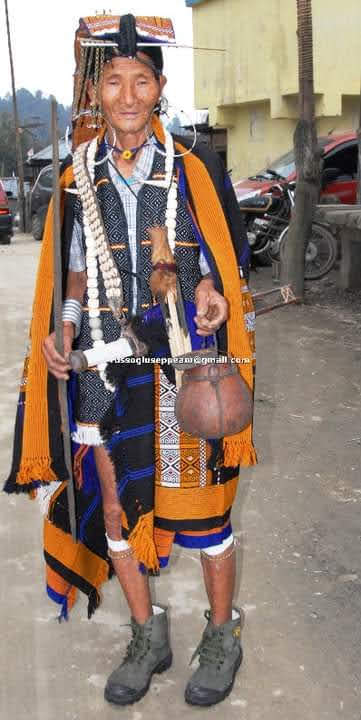
 The Apatani tribe of Ziro Valley, Arunachal Pradesh is an indigenous group in India that has a unique culture and way of life. We all must put efforts in saving our unique culture, one must do these:

Photo credit : Hassang Frame's

  1. Educate yourself about the culture: Learn about the Apatani people, our history, customs, traditions, and beliefs. This will give you a better understanding of our culture and the challenges we face.

  2. Promote cultural tourism: Encourage people to visit the Apatani region i.e. Ziro valley where we are originated and learn about our culture. This can help create awareness and generate income for the community.

  3. Support local artisans: The Apatani people have a rich tradition of handicrafts, such as bamboo and cane work, weaving, and pottery. Buy their products and support their livelihoods. Perhaps you also can learn to weave.

  4. Encourage the younger generation to save our unique culture: Many young Apatani people are moving away from their traditional way of life. we must encourage them to learn about their culture and take pride in their heritage.

  5. Photo credit : Hassang Frame's

    Photo credit : Hassang Frame's


  6. Preserve the environment: The Apatani people have a unique way of farming that is ecologically sustainable. Encourage the preservation of their traditional farming methods, which also will preserve the environment. we should work towards sustainability.

  7. Photo credit : Tage Kanno
  8. Partner with local organizations: Support local organizations that work to promote and preserve the Apatani culture etc.

Overall, it's important to approach cultural preservation in a respectful and collaborative way by our government working with the Apatani people themselves to ensure that their culture is preserved and celebrated for generations to come.

Tuesday, March 2, 2021

Myth Associated With the Apatani Textile Culture

 Myth Associated With the Apatani Textile Culture :


By #Takhe_Kani

(this post has been shared by #Taku_Tara in  #TanwAguñChinsa, 2012)


The Apatanis of Arunachal are not only famous for their remarkable achievement of permanent terrace-wet-rice cultivation perfected by the indigenous irrigation system and fish-cum-paddy culture but also for their handicraft and handloom works. Their products, exuberant in colour, play a significant role in the socio-economic and socio-religious development of the Apatani society.


The finished product of the textile works of the Apatani are all classified into sacred and secular dress according to their uses. The sacred dresses are the dresses of the priests and ceremonial dresses of the woman. These robes are never used, other than during religious occasions. The ordinary or secular dresses are for protection against the climatic change and also to cover themselves.


The priest called nyibu, in Apatani, brings life and prosperity to man through his spiritual knowledge. In order to mediate in a befitting manner, the nyibu requires a set of dresses and ornaments, when recognised as a confident priest in his society.


The significance of the dresses and ornament of the priest is more concerned with religious traits. It is believed that they impart more spiritual knowledge, wisdom and supernatural powers to him. If the priest leaves out any of the items during his prayer it will adversely affect him as well as the solemniser.


The dress of the priest consists of zillang, a piece of shawl used during celebration of the socio-religious ceremonies like myoko, murung and subu; zibo (zigziro). Shawls are used only by the village council who lead the community feast, during myoko ceremony abyo, a small robe used during the prayer-time of myoko or murung or subu ceremony; zikhe tarii, a type of jacket richly designed in black and white in general. This is used with abyo; jilya, an Assamese cloth known as ari sador with or without design. This cloth is wrapped inside the zillang; milo-sampo, male beads of Tibeto-China origin; dinko, a copper or metal skewer which is put on hair-knot horizontally through the knot; dinko-ranyi, a ring chain made originally of gold, silver or bronze and is of Tibeto-China origin (this is put on both the ends of the skewer at the time of ceremony prayer); rarang, a big ear-ring of Tibeto-China origin; yaru-lachang, a small ear-ring also of Tibeto-China origin; kobyang, bangle originally imported from Tibet and China through neighbouring tribes; liiring, chain which is put on the hinges of the legs. Originally, it was made of gold or silver or bronze, and is of Tibeto-China origin; tarin is a cane knit ring attached with liiring; chiri, Tibeto-China sword with its scabber which is put on the body (the hanger of its scabber is decorated with cowry shell with sliced cane); miiyo-piilye, a bundle of peacock, hornbill and domestic cock feathers with handle made from cane knit bowl (used in the murung and subu ceremonies); pinta-yaju, a sacred vessel where laddle is made of a bottle-gourd; duting, a wooden plate with a small design on which the priest sits at the time of prayer; byoda, a piece of animal skin on which dunting is put; chibba, a small basket made of cane and knitted beautifully (may not be used in certain ceremonies, can be used when people go away to forests); alyi-lyikho, a bow without its string (used in the myoko ceremony only).


The aforesaid ornaments were mostly made of gold, silver bronze, copper and metal and were imported from Tibet and China through northern Nyishis and Hill Miris people in exchange of mithun, cow and rice. After discovering the trade routes towards the Assam Valley during middle of the 19th century, they obtained enough ornaments as well as agricultural tools from the plains people.


Without knowing the myths and tradition we cannot understand the meaning and concepts of the tribal culture and religion, because these are always associated with their life. Indeed, the myths, traditions and the sacred literatures throw a significant light on all aspects of tribal life, e.g. the origin, migration and cultural and religious identities of the tribes.


The sacred myths of the Apatanis reveal that Aba Donii-Hema Donii was the poorest among the poors in the society. priests performed ceremonies in order to bring him joy and prosperity. But by doing so, they too became poor till left with one boar and a mithun. Iipyo Nibo performed the murung ceremony in his house sacrificing one boar and mithun called Lyiyang Lyipo and Siyang Subu with the advice of Iipyo Popi, the supreme adviser of mankind. This ceremony was performed by Aba Nibo with full dress according to the advice of the Iipyo Popi. After this ceremony, Hema Donii became the richest of the rich along with his wife and children.


The female ceremonial costumes of the Apatanis are different from that of the male. The female costumes are classified into two, in accordance with their use : sacred and secular costumes. The sacred robes are used only in ceremonial occasions like murung, subu and myoko festivals. The secular or ordinary skirts are used as everyday dress. The ordinary garment, which are good-looking, are put on when the women are away from home. The ceremonial female costumes consist of billang abbi, a sacred skirt, tipya tari, a sacred jacket, pyami pulye, a piece of cloth for both men and women used on important occassions, and bisibilyee, a red skirt reserved only for ceremonial occasions,


Cotton was not cultivated by the Apatanis. This they got from the Nishis by exchanging rice and other household articles. Now, the yarns are available in the market. The women purchase the yarn and weave beautiful clothes in traditional pattern and designs. Weaving, ginning, spinning and other textile works are confined to women.


The designs of shawls and jackets of the priest as well as skirts of the woman signify Apatani's, religious belief. The sacred literature reveal that these designs belong to the goddess Chrung Yarmii Bunyi, and god Iiji Loma.


It is also noted that the dresses and ornaments of the priest are never buried with them, when they die. It is believed that if these are buried, their descendents would not become priests in future. If he has no son, he gives his dresses to the nearest cousin-brother. Therefore, their dresses and ornaments are preserved through the ages.


There are myths, legends and other stories associated with the dyeing, weaving, creating fibres, and knitting. The ceremonial dresses and ornament of the priest and women were considered as belongings of gods. So, both the layman and the priest never wore these other than on religious occasions. But the designed shawls, and scarlet skirts are now worn even by the school children. Those shawls, and skirts are very popular at the local marts and markets through local textile units and government emporiums.

#Apatani_textiles

#Nyibu_the_priest



Sunday, October 19, 2008

Tanii beads-8 : small coloured glass beads

Coloured glass beads bought from the plains are very popular among Taniis, as some of their necklaces are composed of several rows of small or medium-sized beads of all sort.

1. Many of them belong to the "bimpu family". Bimpu is a generic term for medium-sized glass beads, especially those that make up bimpu tasan, a necklace composed of as many as 20 types of beads displayed on a dozen or so strands. The shapes vary from cylindrical to roundish. They are differentiated mainly on the basis of their hues:
  • lanchan bimpu : red slightly translucent glass bead
  • ji bimpu : dark blue slightly translucent glass bead.
  • jiji bimpu : green slightly translucent glass bead
  • horpu bimpu : translucent glass bead


jiji bimpu

ji bimpu


lanchan bimpu
horpu bimpu

  • bimpu ami is a special type of glass beads originating from Venice circa 19th century. Black or burgundy in colour with white dots, they are commonly known as "Skunk beads". The Taniis simply call them bimpu ami or "eyed bimpus".


bimpu ami

2. Tado are small, cylindrical opaque yellow beads used to make necklaces known as tado tasan. Two shades are distinguished, each used to make up a specific necklace simply consisting of several strands of these beads.
  • akho tado : bright yellow
  • aper tado : terracotta


akho tado (left) and aper tado (right)


3.
pike tasan is a translucent glass bead of amber hue.


pike tasan
(one
bimpu ami has been inserted in the middle of the row)

4. nyime perun (or peron), literally "Tibetan soja bean" is a small, cylindrical dark blue bead. As the name indicates, they seem originate from Tibet, or more probably, as Fürer-Haimendorf suggests, they were probably obtained from Tibet on a regular basis till the Chinese takeover. As he writes in 1962 :

"Most women possess strings of crudely cut cylindrical glass beads of dark blue clour and it could seem that these have also come from Tibet. They are quite different from any beads manufactured or known in India today (...) Today they are no longer popular, and have indeed very little market value. Their place has been taken by smaller and smoother glass beads of similar dark blue colour which have for some years been available in the bazaars of North Lakhimpur." (1962, 68).

Nyime perun

Nyime perun are used to make necklaces known as nyime tasan or ji tasan, consisting of several strands of those dark blue beads ornamented with yellow and red beads.

5. Lebu ralin, despite its name, is not a carnelian bead but simply a glass bright red bead which is set up at intervals to decorate nyime tasan necklaces.


lebu ralin


Wednesday, October 8, 2008

Apatani beads-7 : khiinii miru


Khiinii miru are unetched, spherical black and white banded agates. This type of stone is commonly known as "Sulemani agate", or "Solomon agate", named after King Solomon and originally supposed to be from his legendary mines. They appear to be part of a long established production whose historical center was Western Asia and may date back as far as 2500 BC. Of course, many beads found today on traditional necklaces are not anyway near that old. The pair displayed on the above picture is set up at the bottom of a santer tasan, and contrasts with the overall blue hue of the necklace. From a strictly commercial point of view, these are too worn and damaged to have any value. But their social, cultural and aesthetic value is, of course, a different matter.

In the course of history round banded agates seem to have found their way to the Himalayan cultures, especially the Tibetan one where there have become known as Bhaisajyaguru, "the Medicine Buddha" (Sman-bla in Tibetan) beads. Many of them are probably just a few hundred years old. Both Suleimani and Bhaisajyaguru refer to the same kind of stone, basically black agate with lighter banding. The cult of Bhaisajyaguru being very popular in Tibet (as well as in Mongolia, Tibet, Korea and even Japan), it is likely that the stone was attributed some talismanic or medicinal properties by the popular religion, as for Dzi-beads (see previous post).

Banded agate bead from Himachal Pradesh (for comparison)


Bhaisajyaguru beads from Nepal (left) and Tibet (right). Tibetan stones are often found to have narrower bands. (Source: garudatrading.com)

Sunday, October 5, 2008

Tanii beads-6 : Bukhe Ripo

Bukhe ripo bead set up on a carnelian bead necklace, lebu tasan.

Bukhe Ripo are very distinctive beads worn by women, either interspersed with glass or carnelian beads or, if the owner is fortunate to have a collection of bukhe ripo, as a whole necklace made from the stones. Mainly oblong or cylindrical in shape, they are pierced lengthwise. The beads are engraved with geometrical patterns : circles, ovals, squares, zig zags or stripes. Colours range from browns to blacks.

The ultimate origin of those stones appears to be the Indus Valley and Iran, where they have been manufactured for the most part between 2700 BC to 1000 AD. The first ones were made in the context of the Mesopotamian and Indus Valley Civilizations, whereas in the Late Period they were mostly the work of Persians. They are either natural agates- black and browns with white banding, or fossil agate from petrified wood, exhibiting various shades of brown, some with different color inclusions. The stones are etched by hand for creating the very distinctive motifs which usually appear in ivory white (the process of making contemporary etched agate beads can be seen here).

Interestingly, nowadays etched agate beads are found primarily in the Tibetan cultural sphere (viz. Tibet, Ladakh, Tibetan areas of Nepal, Sikkim and Bhutan, etc.), and for that reason they are popularly known as "Tibetan agate beads" (or "Pumtek beads" in Burma). Mostly through bartering exchanges with Tibet (and then through heritage) they have also been acquired by many inhabitants of Arunachal Pradesh. In Tibetan language, they are known as Dzi, which means 'brigthness', 'clearless', 'splendour', and are much valued. For some very fine pictures of those stones, you can visit this very informative blog. A very rich symbolism is also attached to these stones, mainly based on the number of circular motifs or "eyes" (from 1 to 21) which are represented on them (see this link), as well as a number of additional parameters (see this link).

Though the beads have never been manufactured in Tibet, they are considered as precious jewels. They are also believed to provide people with protection, so that someone who owns one one such stone will not let it go easily, nor will usually sell it. The Tibetans (as well as the Monpas of Arunachal Pradesh) find them occasionally in the earth when tilling their fields or taking their animals for grazing. The popular belief attributes a divine origine to the stones, which as such are endowed with talismanic properties and medicinal value. For that reason, Tibetans farmers or herders are often seen wearing one or two Dzi-beads around their neck. The Tibetan/Chinese numerology interferes with the popular belief by attributing a distinctive talismanic value to the stones according to the number of eye motifs. The most sought after (and hence the most expensive stones) are the ones having an odd number of 'eyes' (the best ideally having 9 or 13). Next most popular are those having unusual patterns, inclusions or colors, followed by the beads having an even number of eyes.

Some of them, which are old and authentique artifacts, command high prices, as much as several thousands dollars a piece. But nowadays many glass imitations have also been made, which are not easily distinguishable from genuine stones. And thousands of "fake made-in-China Dzi beads" are offered for sale daily on Ebay. It is likely that many Dzi beads found in modern Tibet and Arunachal are copies, including the one displayed on the above picture. So beware !

modern so-called "Dzi beads"

PB


Saturday, October 4, 2008

Tanii beads-5 : pilya papu or Peking glass beads

Pilya papu, more generally known as "Peking glass" beads, are large round beads of greenish colour. Many of them originate from Poshan in Northeastern China. Most were made to imitate Chinese precious stones, especially jade, and so are found in various shades of green, from dark green to very light, whitish almond green.


A Chinese necklace made of Peking glass beads (for comparison)

Though all are made of glass, the Taniis do not confuse "Peking glass" beads with other beads of similar shape and size such as the so-called "Padre" beads (for eg. santer, see previous post). They also do not normally mix the two types of beads on necklaces. Typically, two pairs of pilya papu displayed in a symmetrical way ornament the middle section of sampu tasan or chank shell necklace.


Sunday, September 28, 2008

Tanii beads-4 : page or Chinese melon beads

Page beads have a very distinctive shape, commonly called "melon-shape" (though pumpkin would be more accurate). They are glass paste beads of various hues, the most common being shades of blue, green and yellow. Quite common in Arunachal Pradesh and Tibet, they originate from further North in China. From the Tang dynasty onwards, China has acquired a worldwide reputation and a leading influence on the art of glass bead making. Though the Chinese did not flood the trading markets with other countries with these beads, glass melon-shaped beads have been found in various cultures as far as New Guinea where, till recently, they were used as trade currency. In making glass the Chinese used lead-barium formula which makes it more brillant, easier to cut and easier to remelt. It also makes much softer and heavier beads than contemporary soda-lime glass produced in Europe.

The Taniis use
page
beads for making various necklaces, interspersed with other beads or forming separate rows. A single strand of Chinese melon-shaped glass paste beads of light-blue hues is known as sampyu page and is one of their favourite necklaces.

Tanii language differentiates at least 8 types, according to the hue, size and appearance :
  • santer page : light blue/turquoise, opaque, big.
  • sampyu page : light blue/turquoise/jade green, opaque, small
  • saro page : dark or light blue, slightly translucent/medium size
  • sankhe page : blue or dark blue, slightly translucent, small
  • horpu page : crystal-like, translucent, medium size
  • bilun page : terracota, brownish yellow, slightly translucent, medium size
  • pike page : amber, brownish, slightly translucent, medium size
  • halan page : light blue, opaque, small

santer page...............................................................................................sampyu page


saro page (left and right)

sankhe page


horpu page


bilun page


pike page


halan page


A strand of old Chinese melon-shaped glass paste beads, of amber hues, from Tibet (for comparison)
.


Saturday, September 20, 2008

Tanii beads 3 : Turquoise-blue glass beads

The Taniis use turquoise-blue round, chunky or cylindrical beads to make large necklaces worn by women known as santer tasan and sampyu tasan. Though imported from Tibet and indeed reminiscent of the true turquoise stones much prized by the Tibetans, they are in fact Chinese glass beads commonly known as "Padre" beads, whose colour is similar to those of turquoises (it can be also turquoise coloured tile beads in some cases). They are very popular among the Tibetans as among most indigenous communities of Arunachal Pradesh.

  • sambyu : medium size light blue beads (top)
  • santer : larger type of light blue beads (bottom)


  • santer page is a blue melon-shaped glass bead of the larger type (santer). On this picture displaying a few old beads the original shape has been abrased and only notches remain visible.


The smallest type of turquoise-blue glass bead is called sampyu. It comprises :
  • - alan : roundish, chunky beads
  • - sampyu peron or sampyu perun : literally "bean sampyu", cylindrical in shape

alan and sampyu perun interspersed on sampyu tasan


  • - sampyu page : melon-shaped bead


An old Tibetan necklace made of melon-shaped turquoise-blue glass beads (for comparison)

Wednesday, September 10, 2008

Tanii beads-2 : lebu or Carnelian beads

Carnelian and agate beads are used by Taniis to make only one type of necklace, which is also their longest necklace. It is known as lebu tasan and consists mostly of a single row of such beads. Its very typical colour, reddish orange shades, is due to iron oxide contained in the stones which may have bandings. Some of them can also be translucent or opaque. The carnelian and agate beads worn by the Taniis are not always faceted, but those who are are mostly hexagonal. Rectangular beads seem to be rare.

Several shapes and apparences are distinguished :
  • lebu : long hexagonal carnelian or agate bead which gives its name to the necklace. The biggest pair, or the biggest ones, are positioned at the bottom part.
  • gara or garya : short cylindrical non-faceted carnelian or agate bead. Mostly used as spacers between lebu beads.
  • yasi lebu : translucent carnelian or agate bead. Possibly also crystal in some cases.
  • rinyo lebu : diamond shape bead, usually positioned towards the middle section of the row.


lebu

gara/garya


rinyo lebu


yasi lebu


Sunday, August 31, 2008

Tanii beads-1 : sampu or chank shell beads


Among the Tanii's most valued ornaments are chank shell beads, also inaccurately called "conch shell" beads. The Indian chank shell is a large gastropod shell (Turbinella pyrum) found along the coast of India and Pakistan. It has been used as ornament in the Indian subcontinent for 4000 years and is regarded as sacred by both Hindus and Buddhists. Tanii chank shell beads seem to have reached the Subansiri area via Tibet. In the Himalayas and Tibet the shell has numerous sacred associations : symbol of purity, source of benevolent forces, etc.


Turbinella pyrum

The Taniis use the chank shell only as beads or necklace fasteners, not as rituals objects as in Tibet. At the same time it is the only shell used by them as body ornament. Cowrie shells (Moneta moneta) which are sought after for decorating the cane straps of Tibetan swords (chiri) do not serve for making beads nor any necklace part.

1. Beads
Sampu (or sampo) is the generic name for chank shell bead. A single strand of 70 to 80 of such beads makes one typical necklace known simply as sampu tasan.

3 types are distinguished :
  • * sampu/sampo (proper) : these are large, chunky or discoid white beads which make up the middle and lower section of the necklace.


  • * sanje sampu : these are smaller, more cylindrical in shape, and usually flatter; they are positioned at the upper section of the necklace.


  • * hiiku : the biggest ones, hand carved so as to give the beads a helicoidal shape, they are also one of the most valuable ornaments of the Taniis. One single bead can cost upto 15000-20000 Rps. Usually found by pairs, they occupy the lowermost section of the sampu tasan.


2.
Fasteners
Some necklaces are fastened under a chank shell button (sango tape) which is worn on the nape of the neck. They are circular, square or oblong in shape. Square fasteners have rounded corners.


Long oblong chank shell used as fastener for sampo tasan


Round and square sango tape on various necklaces


The fondness of many Himalayan people for marine shells has lead some scholars to speculate erroneously that the historical cradle of those populations is located near the sea. Although this "sea origin hypothesis" is not backed by any archeological nor historical evidence, it periodically resurfaces (you can find one example here). As a matter of fact the reality appears to be just the opposite. Marine beads fetched high prices in the Himalayas not because they would have always been in possession of the Himalayan peoples, but because they were not, and because they constituted a rarity in the region that could be only acquired by purchase or heritage. It is a well known fact to anthropologists that even in the Pacific islands were marine shells are abundant everywhere, those who are the most sought after and fetch the highest prices are never the ones found locally, but always those coming from distant places, often through complex trade routes.
PB
(Special thanks to Nanku Hage for having
helped me to collect the above pictures at Ziro)

Apatani terminology related to the paddy crop

Cooked rice is #Apíñ Raw rice is  #Embiñ /Imbiñ Unhusked paddy is #Emmo /Imo Saplings or transplanted paddy plant is #Endi / #Indi Inflo...